Vintage Car 3D Model
View Full Project on ArtStation
Concept
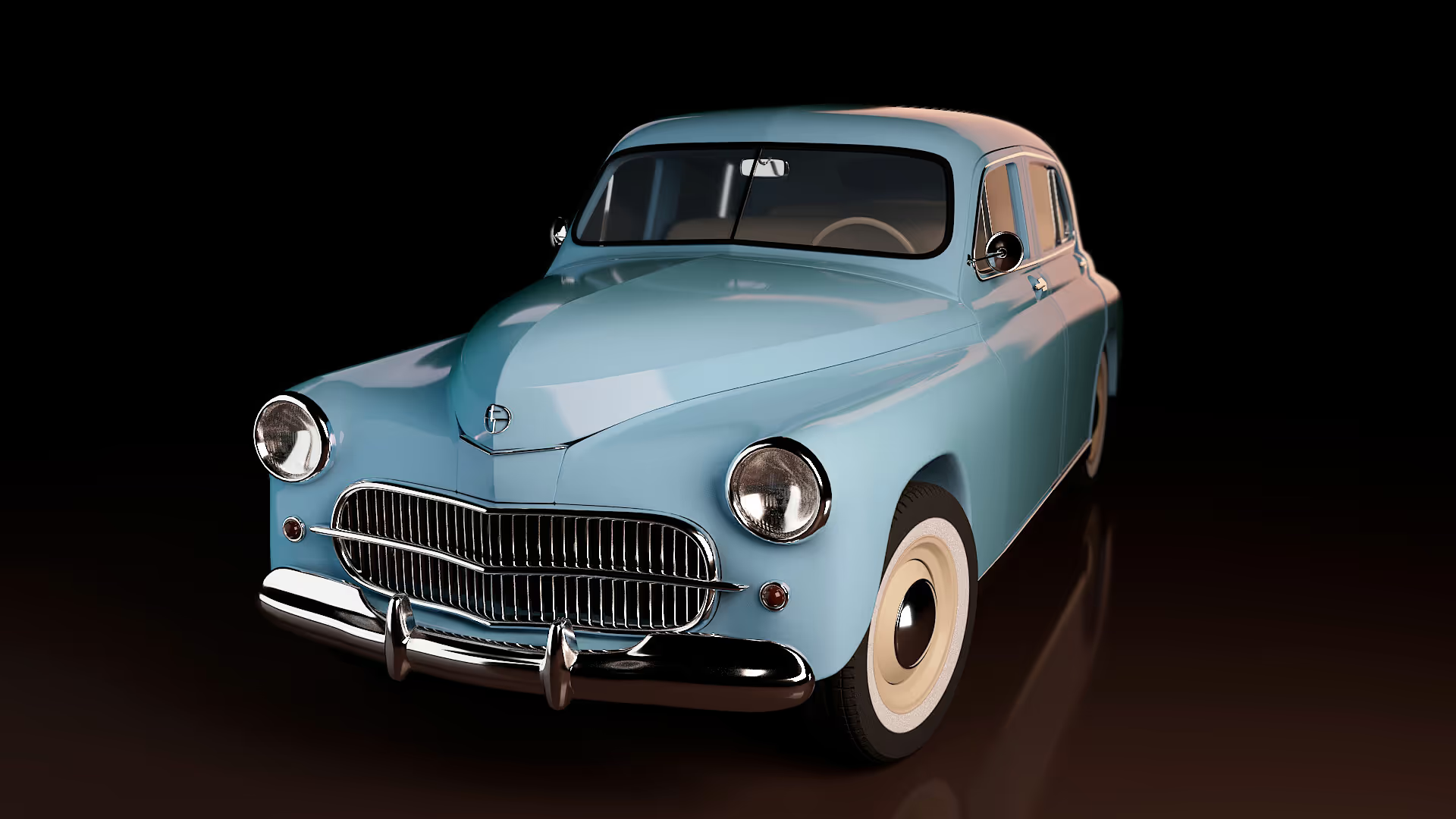
The Vintage Car 3D Model was created as part of my Game Graphics Production (GGP) coursework at DAE.
The goal was to design, model, and present a realistic vintage car while demonstrating strong modeling fundamentals,
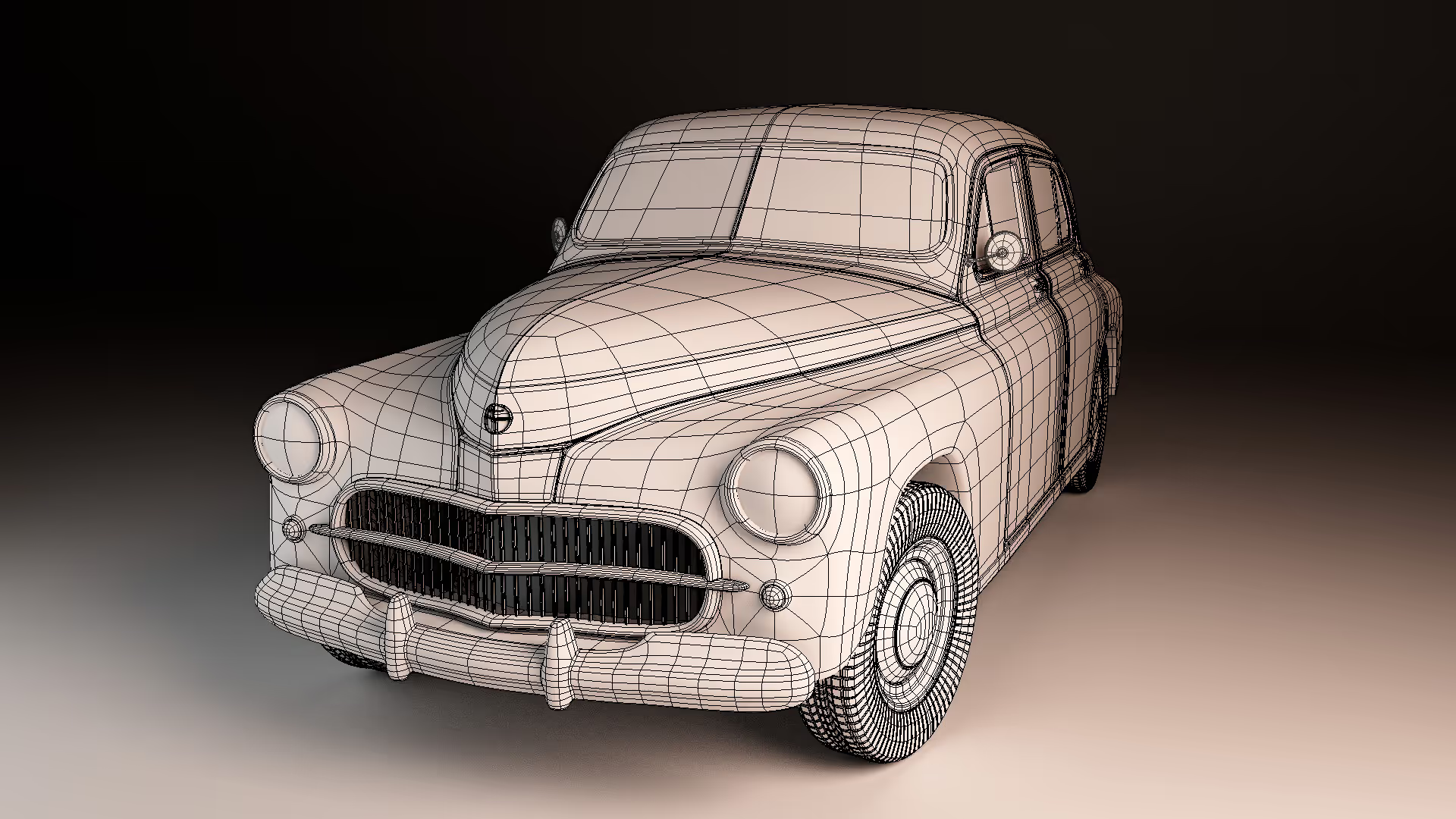
clean topology, and an understanding of form and proportion.
I chose a classic car for its intricate mechanical details and timeless shapes - it offered the perfect challenge to balance technical precision with aesthetic elegance.
The model of a car I made is WARSZAWA M-20
Process
This project was built entirely in Autodesk Maya - from blockout to final presentation.
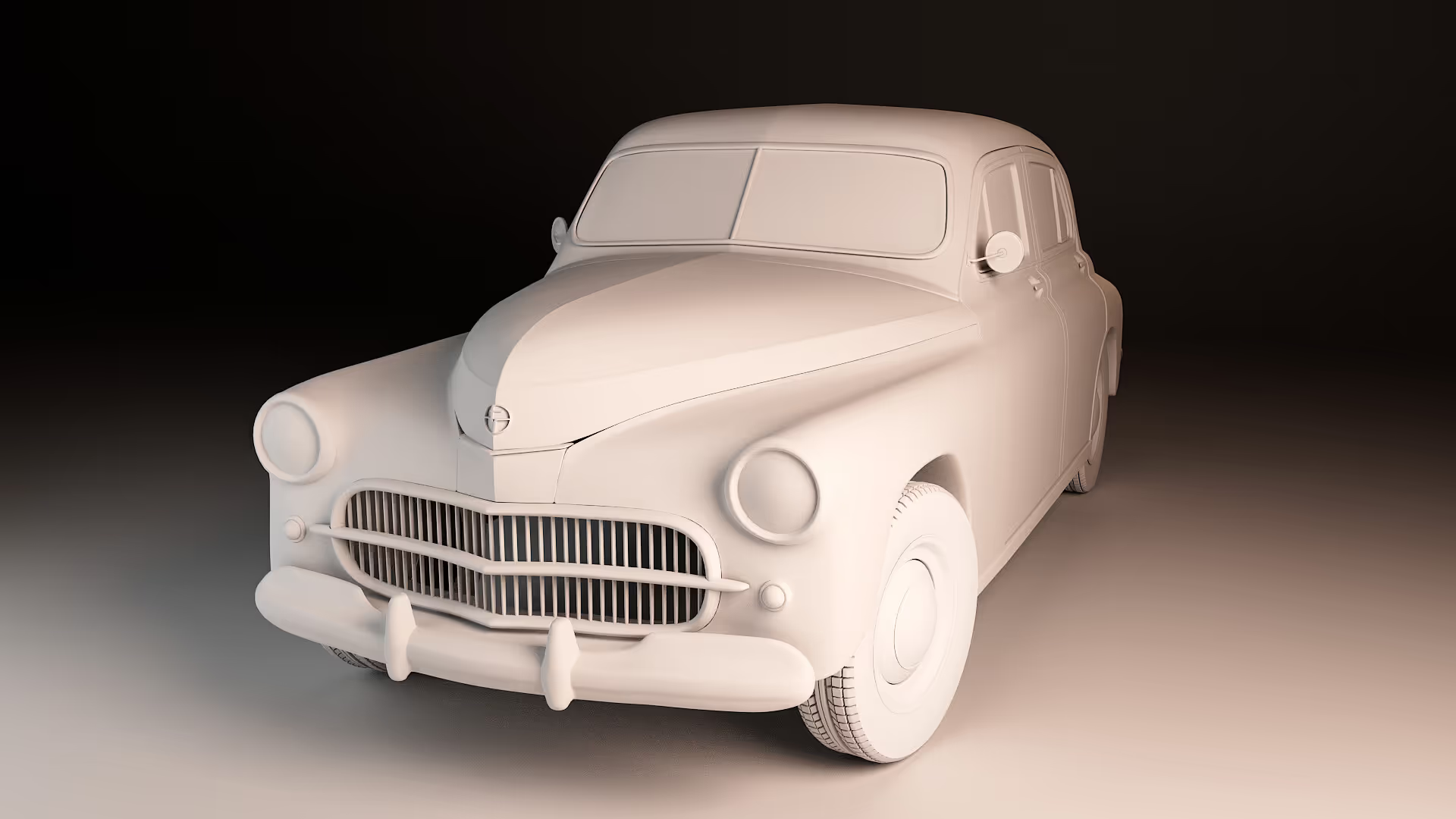
The workflow emphasized modeling efficiency, clean mesh flow, and accurate proportioning.
Workflow:
- Reference Gathering: collected blueprints, vintage car photographs, and real-world material references
- Blocking: started with primitive forms to establish main proportions before refining smaller details
- Modeling: focused on clean edge flow and proper subdivision topology for smooth curves and reflections
- Details: modeled trims, headlights, bumpers, and interior components to achieve authenticity
- Materials & Shading: created basic shaders directly in Maya to test lighting response and specularity
- Lighting & Presentation: built a simple studio lighting setup using area and spot lights to highlight surface definition
All aspects - modeling, lighting, and rendering - were completed within Maya,
demonstrating mastery of a single, professional-grade 3D pipeline.
Outcome
The final model showcases the elegance of classic automotive design through clean modeling and precise lighting.
It demonstrates a solid understanding of 3D fundamentals - from accurate scale and edge loops to smooth reflective surfaces.
The neutral studio setup allows the model’s craftsmanship to take center stage.
View Full Project on ArtStation
Reflection
This project was a defining step in my GGP journey -
it solidified my confidence in hard-surface modeling workflows and in maintaining clean, optimized topology for both real-time and cinematic contexts.
I learned the importance of working efficiently within a single toolset, how to control form through precise geometry,
and how presentation lighting can elevate technical work into something visually striking.
It reminded me that great 3D art starts with solid modeling discipline,
and that mastery of fundamentals is what makes everything else possible.