Sound Wave Clock
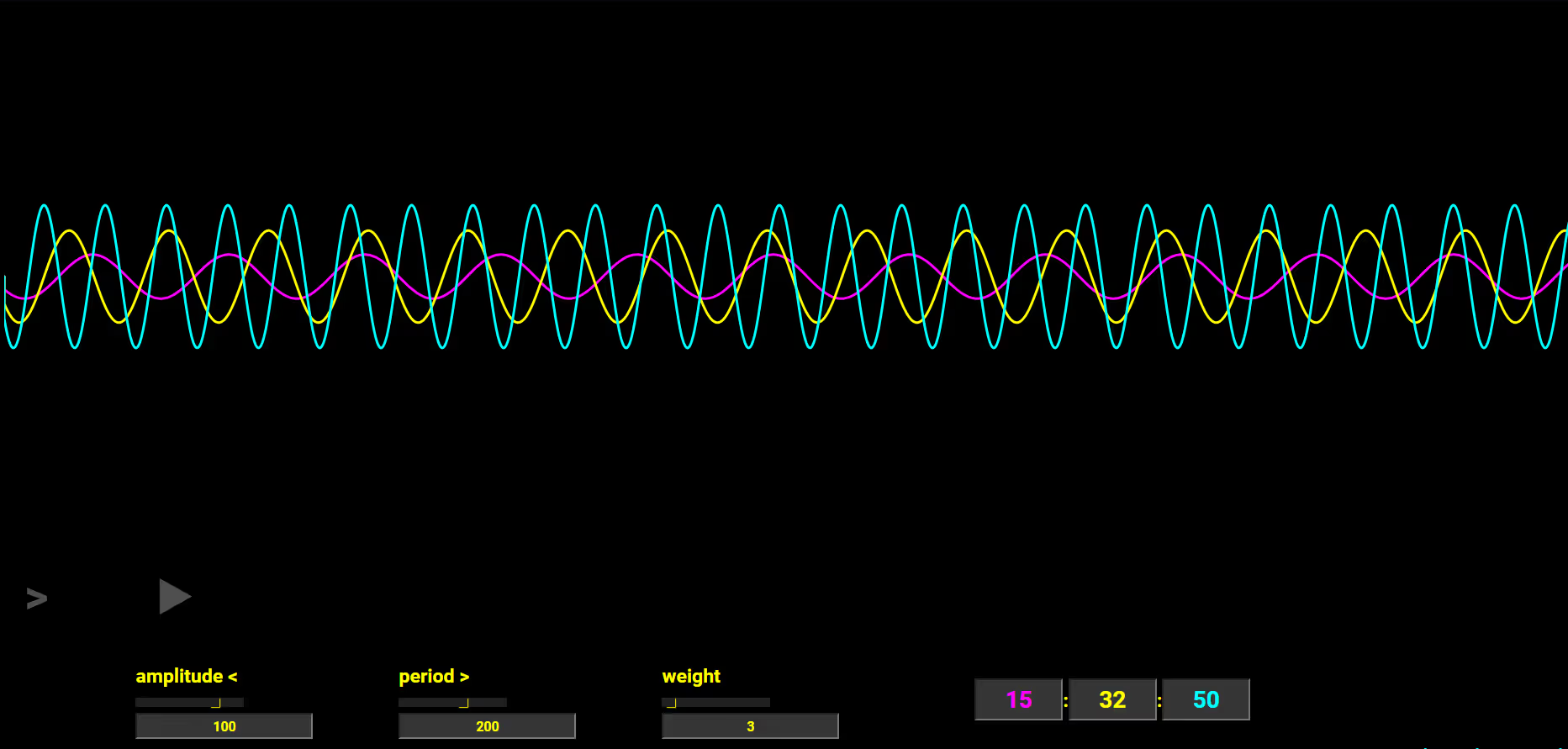
Concept
The Soundwave Clock started as an exploration of how sound and time can intersect visually.
Instead of reading time through numbers, I wanted to feel it - through sound, visuals, and flow.
The idea was to merge function (a clock) with expression (sound-responsive design).
Process
I built the experiment using p5.js, capturing live microphone input and translating it into waveforms.
Each second, minute, and hour is represented by a different motion pattern that reacts to sound amplitude.
The interface changes dynamically, turning the act of checking the time into a small performance.
- Ideation: sketched different ways to show time without using numbers or clock hands
- Iteration: tested several sine wave patterns and animations to see which felt most readable as “time”
- Design: kept the interface very minimal so the focus stays on the moving waves
- Development: built the clock with animated sine waves that update continuously based on the current time Close-up of the controls:
Outcome
The final piece is a minimal web-based clock that uses animated sine waves to show the passing of time. The waves slowly change shape and speed based on the current time, so the clock is always moving and never looks exactly the same. Users can tweak some parameters to subtly change how the waves look and feel, but the core behaviour is fully driven by time.

You can try it live here:
Reflection
This project made me rethink how time can be communicated without numbers or traditional clock visuals. Working with sine waves showed me how small changes in motion can completely shift the feeling of an interface. Turning a simple concept - time influencing a wave - into something aesthetic taught me to appreciate subtlety, restraint, and the power of minimal interaction. It also strengthened my interest in creative coding, especially in using small generative rules to create calming, ambient visuals.