Composition as Storytelling - Framing Emotion on Canvas
Exploring how framing, perspective, and camera placement transform drawings into stories.
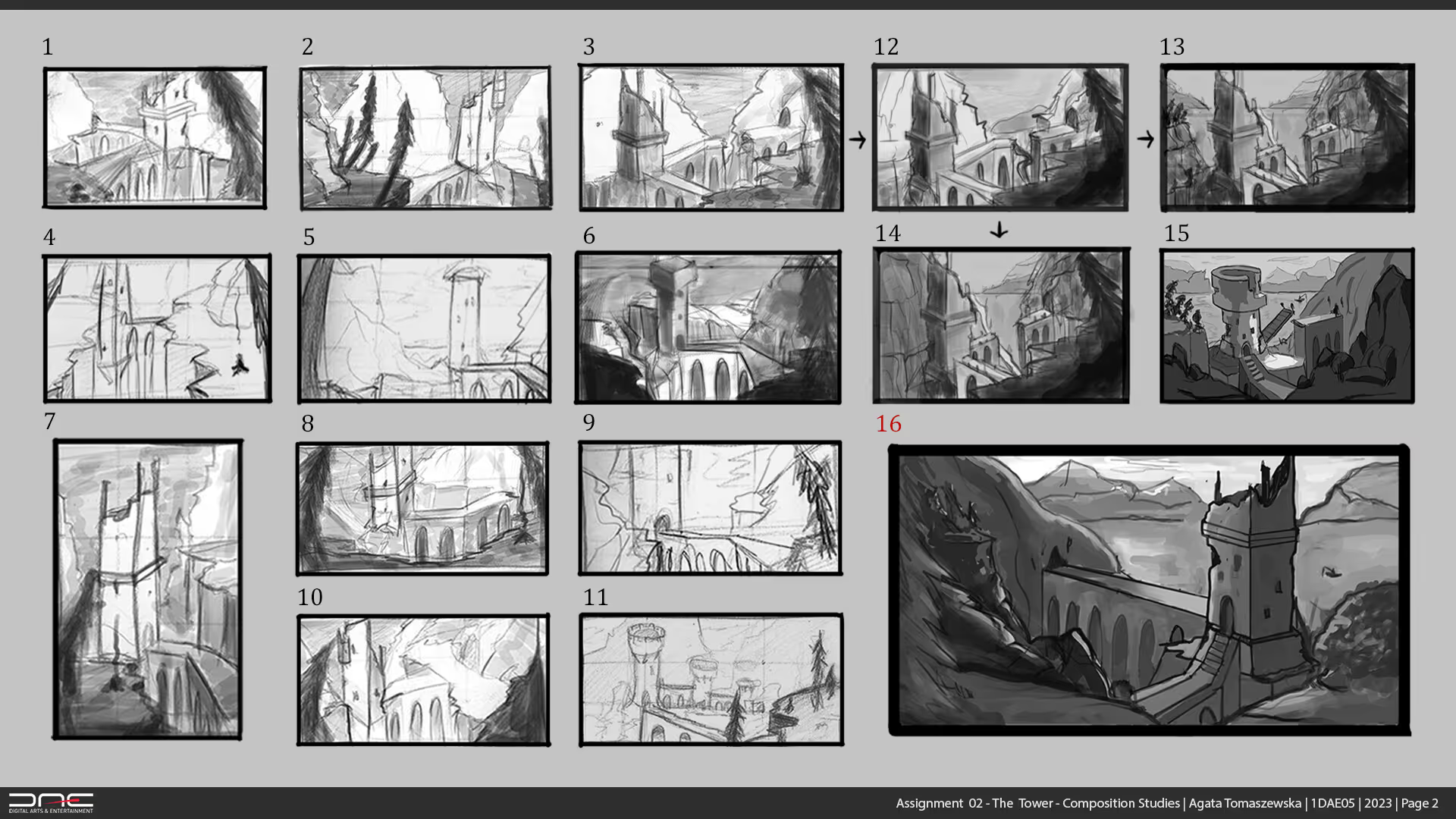
1. Composition as Invisible Storytelling
Composition is invisible storytelling.
Before color, detail, or texture, composition decides what the viewer feels first.
In my DAE composition studies, I learned that even the simplest sketch already carries emotional weight based on how it’s framed.
A high angle can make a moment feel tense.
A wide frame can open space and create calm.
A diagonal layout can push motion and energy across the image.
2. Every Line Has Weight
Good composition is built from intention.
Every line, shape, and silhouette affects where the viewer looks:
- verticals feel stable
- horizontals feel calm
- diagonals feel dynamic
- curves guide the eye smoothly
The placement of these elements creates a hierarchy that tells the viewer what to focus on and how to interpret the moment.
3. Controlling Silence, Not Filling Space
Strong composition isn’t about adding things - it’s about controlling silence.
Negative space creates tension or breathing room.
Contrast directs the eye toward the story beat.
Value structure determines clarity long before color does.
By shaping silence, you shape meaning.
4. The Foundation Behind Every Image
Every great image, no matter the medium, shares the same foundation:
composition gives emotion structure.
Whether it’s a film shot, an illustration, or a simple graphite sketch, the emotion lands because the framing leads the viewer exactly where they need to be.
Composition is the quiet architect behind every story on a canvas.