Stylized Art - Painting Stories by Hand
Exploring the craft of hand-painted textures and why stylization often tells stronger stories than realism.
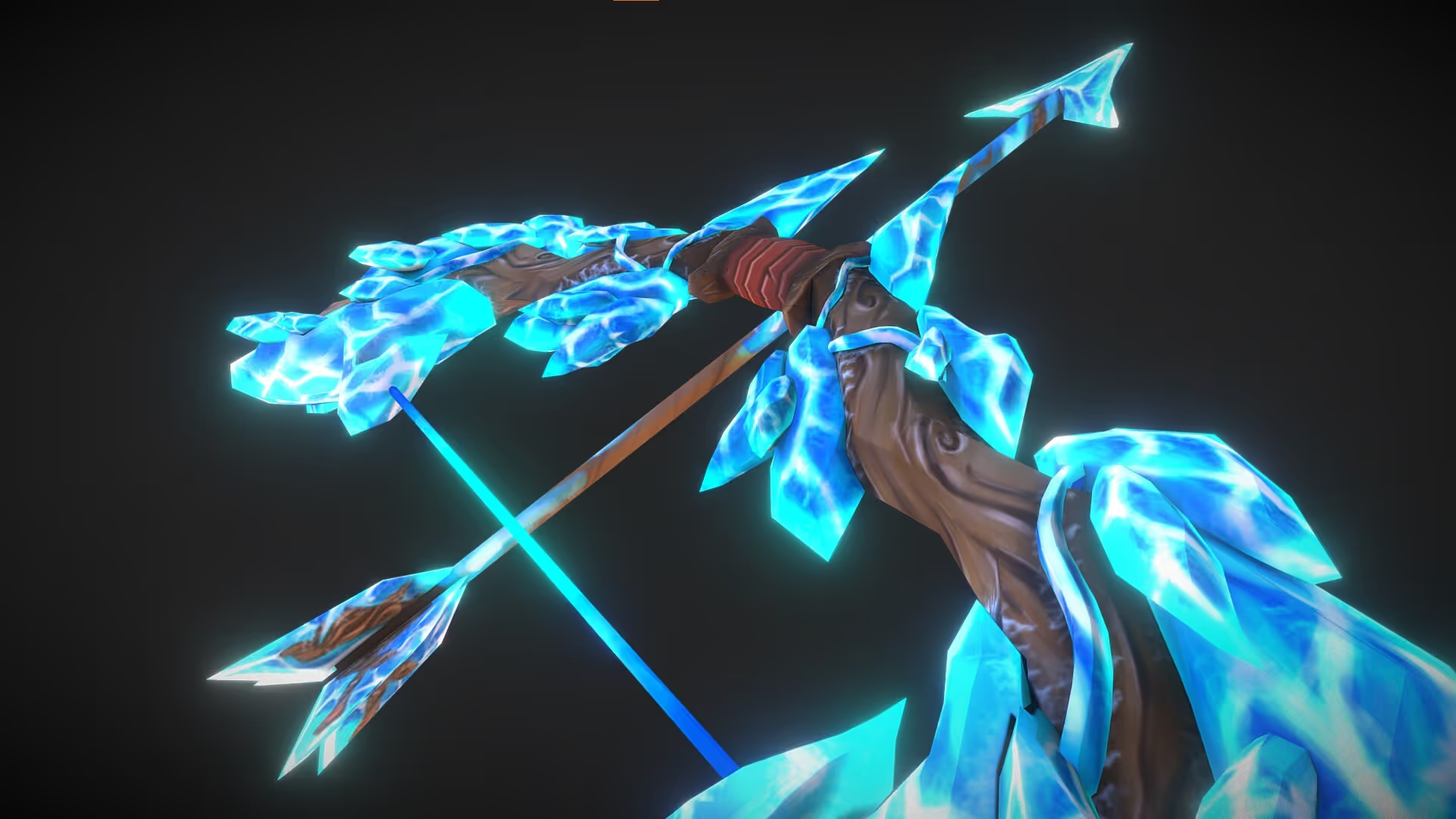
1. The Space Between Reality and Imagination
Stylized art sits in a beautiful middle ground - believable enough to feel grounded, but imaginative enough to say something new.
It’s not about copying the world.
It’s about designing it.
When creating hand-painted textures, you’re not simulating materials with noise maps or procedural shaders.
You’re making decisions - what to exaggerate, what to soften, what to leave out entirely.
2. Painting With Intention
Working in Photoshop taught me that every brushstroke carries meaning.
A simple stroke can define:
- how worn a surface feels
- where the light breaks
- what the material is made of
- the personality of a prop
A chipped stone edge can suggest history.
A warm highlight can suggest friendliness.
A pushed saturation shift can give a prop its entire emotional tone.
In stylized workflows, shape, color, and intention are the primary tools.
Nothing is automated - everything is chosen.
3. Stylization as Control
Stylization isn’t a shortcut.
It’s a form of control.
You decide:
- what details matter
- what forms need clarity
- how light behaves in your world
- how all textures relate to each other aesthetically
Because every element comes from the same hand and logic, the world feels unified - even more so than in realism.
4. Why Stylization Endures
Stylized art ages gracefully because it’s not chasing photoreal benchmarks that shift every year.
It embraces abstraction, emotion, and design language.
It doesn’t try to replicate reality.
It builds its own truth - one brushstroke at a time.